
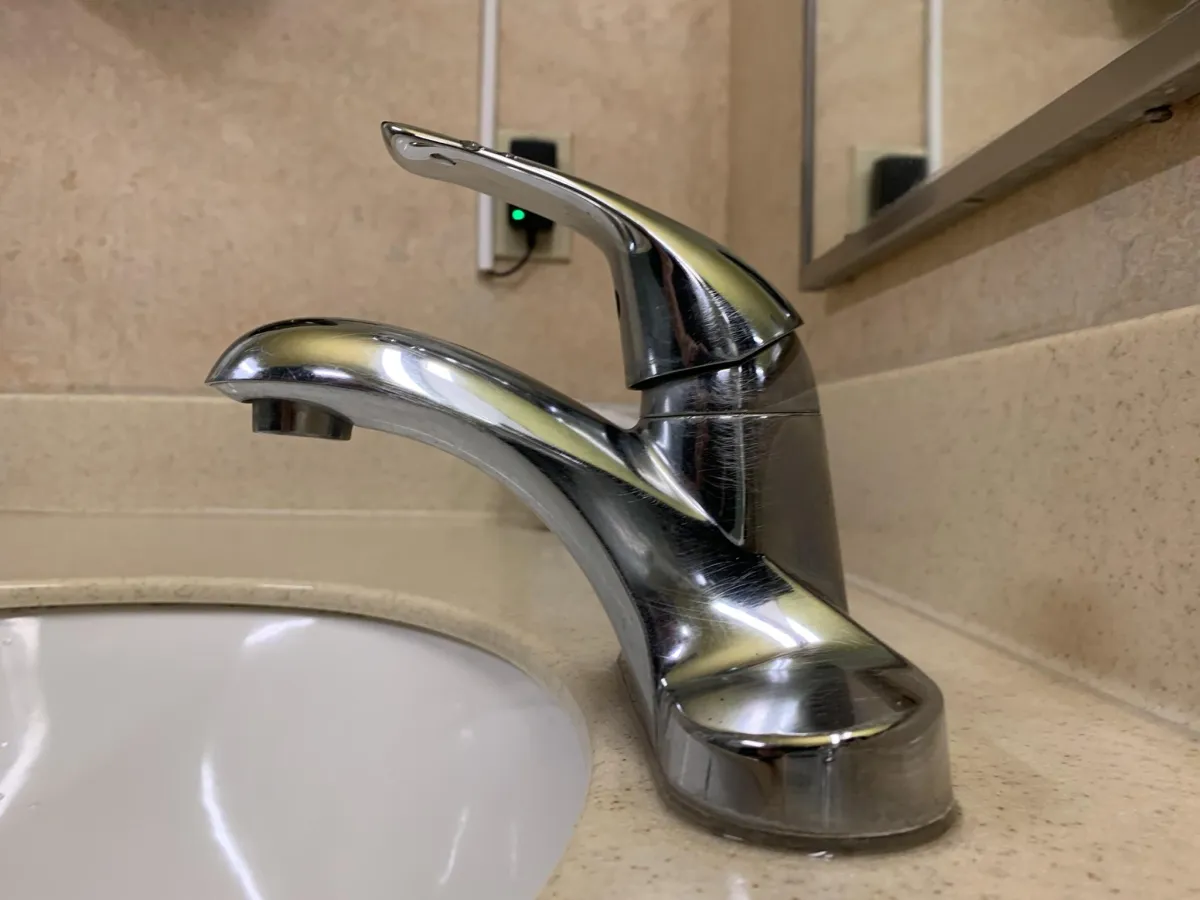
Salem's water is moderately hard. Not catastrophically — we're not talking about the legendary water of Phoenix or Las Vegas — but hard enough that over 5-10 years, it produces real effects on plumbing, water heaters, and fixtures.
If you've noticed any of the signs below, you're dealing with it. Here's what's worth doing and what isn't.
What "hard water" actually means
Hard water contains dissolved calcium and magnesium (mostly). When hard water is heated or evaporates, these minerals come out of solution and deposit as scale — the white or grayish buildup you see on faucets, in kettles, and on glass shower doors.
Water hardness is measured in grains per gallon (gpg) or parts per million (ppm):
- Soft: 0–3 gpg (0–51 ppm)
- Moderately hard: 3–7 gpg (51–120 ppm) ← Salem falls here
- Hard: 7–10 gpg (120–171 ppm)
- Very hard: 10+ gpg (171+ ppm)
Salem water ranges 3–7 gpg depending on your specific neighborhood and water source. Some areas pull from the South Santiam, some from Geren Island reservoir, and specific blending creates minor variation.
How to tell if hard water is affecting your home
Walk through these and count how many apply:
- White scale deposits on faucet aerators, showerheads, or glass shower doors
- Spots on dishes coming out of the dishwasher
- Soap film on tubs and sinks that's hard to rinse off
- Soap that doesn't lather as well as it used to
- Laundry feels stiff or looks duller after washing
- Popping/banging water heater when it runs (sediment on the burner)
- Dry skin or hair after showers, especially if sensitive
- Tankless water heater efficiency dropping over time (scale on heat exchanger)
Three or more of these = hard water is actively affecting you. Seven or more = it's worth addressing.
What hard water does to a water heater
Water heaters are where hard water does its most expensive damage. Here's the mechanism:
When hard water is heated, calcium and magnesium drop out of solution as scale. In a tank water heater, this scale settles to the bottom and accumulates on top of the burner (gas) or around the lower heating element (electric).
The scale acts as insulation between the heat source and the water. The heater has to run longer to deliver the same hot water. Energy costs rise. The burner or element works harder and dies sooner. And once scale is thick enough, you hear the popping and banging — that's water under the scale boiling into steam and escaping.
In a tankless water heater, the consequence is worse: scale deposits on the heat exchanger (a narrow flow channel) and progressively restricts flow and heat transfer. Tankless units require annual descaling to maintain performance. A tankless without descaling in Salem can lose significant capacity in 3-5 years.
Two ways to deal with it
Option A: Annual water heater flushing
For most Salem homes with a standard tank water heater, annual flushing is the pragmatic solution.
Flushing takes 45 minutes: drain the tank, flush with fresh water to clear the sediment, refill. Cost is typically $125–$175 as part of a service call, or $0 if you do it yourself following your water heater's manual instructions.
Annual flushing meaningfully extends water heater life and maintains efficiency. It doesn't help with fixtures, dishwasher spots, or shower door scale — but those are lower-stakes aesthetic issues.
Option B: Whole-house water softener
A water softener treats every drop of water entering the house. It removes calcium and magnesium (replacing them with sodium via ion exchange), so everything downstream — plumbing, water heater, fixtures, dishwasher, washing machine, your skin and hair — gets soft water.
Cost: $1,500–$3,000 installed for a quality residential softener, plus ~$100-200/year in salt.
Worth it when:
- You have or are installing a tankless water heater (preserves its 15-20 year life)
- You see heavy scale on fixtures and want it gone
- Someone in the household has sensitive skin
- You want maximum life from appliances, dishwasher, and water heater
- You're staying in the home 10+ years
Not worth it when:
- You have a standard tank water heater and don't mind replacing it every 10-12 years
- Scale doesn't bother you and your appliances are working fine
- You're planning to move in under 5 years
What we recommend for Salem homes
The call depends on your specific situation. For most single-family Salem homes with a standard tank water heater, we recommend annual flushing and leaving the softener question for later — or until you're upgrading to tankless.
For homes installing tankless, we recommend pairing it with a softener or at minimum a phosphate-based scale inhibitor. Tankless without hard water treatment will need more frequent descaling and loses life.
For homes where fixtures look terrible despite cleaning, and where someone has skin sensitivity, the softener is a quality-of-life upgrade worth doing.
Want to know what makes sense for your home? Call us at (503) 917-3259. We can assess your water hardness, your current appliances, and your situation, and give you a straight recommendation — no upsell pressure.
See our water heater service page for more on maintenance and tankless installation for tankless-specific considerations.