Water pooling around the bottom of your water heater is almost never a small problem. In nearly every case, it means the tank has corroded from the inside out and is leaking — and there's no safe way to repair a failed tank. You'll need to replace it, usually within the next few days.
Before you do anything else, take care of three things.
The next 10 minutes: shut it down safely
You want to stop two things: water flowing into the tank, and energy trying to heat a tank that's losing water.
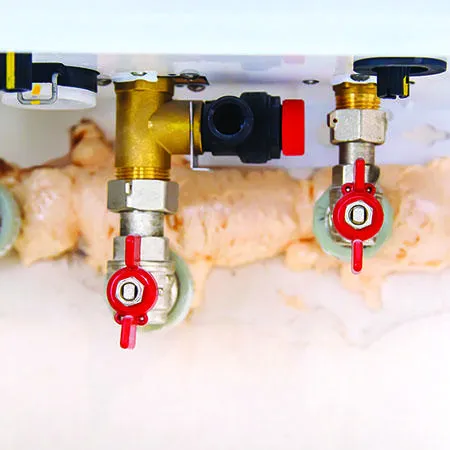
Shut off the water supply to the heater. There's a valve on the cold-water line directly above the tank (usually a lever handle or a round knob). Close it. This stops fresh water from feeding the leak. If you can't find it or it won't turn, close the main water shutoff to the whole house.
Shut off the power or gas.
- Gas water heater: Turn the dial on the gas control valve to "OFF" or "PILOT."
- Electric water heater: Flip the breaker labeled "Water Heater" at your electrical panel.
Contain the water. Towels, a bucket, or a shop vac on any standing water. If water is reaching drywall, flooring, or insulation, the sooner you dry it, the less damage to repair later.
Why it's leaking: the steel tank has corroded through
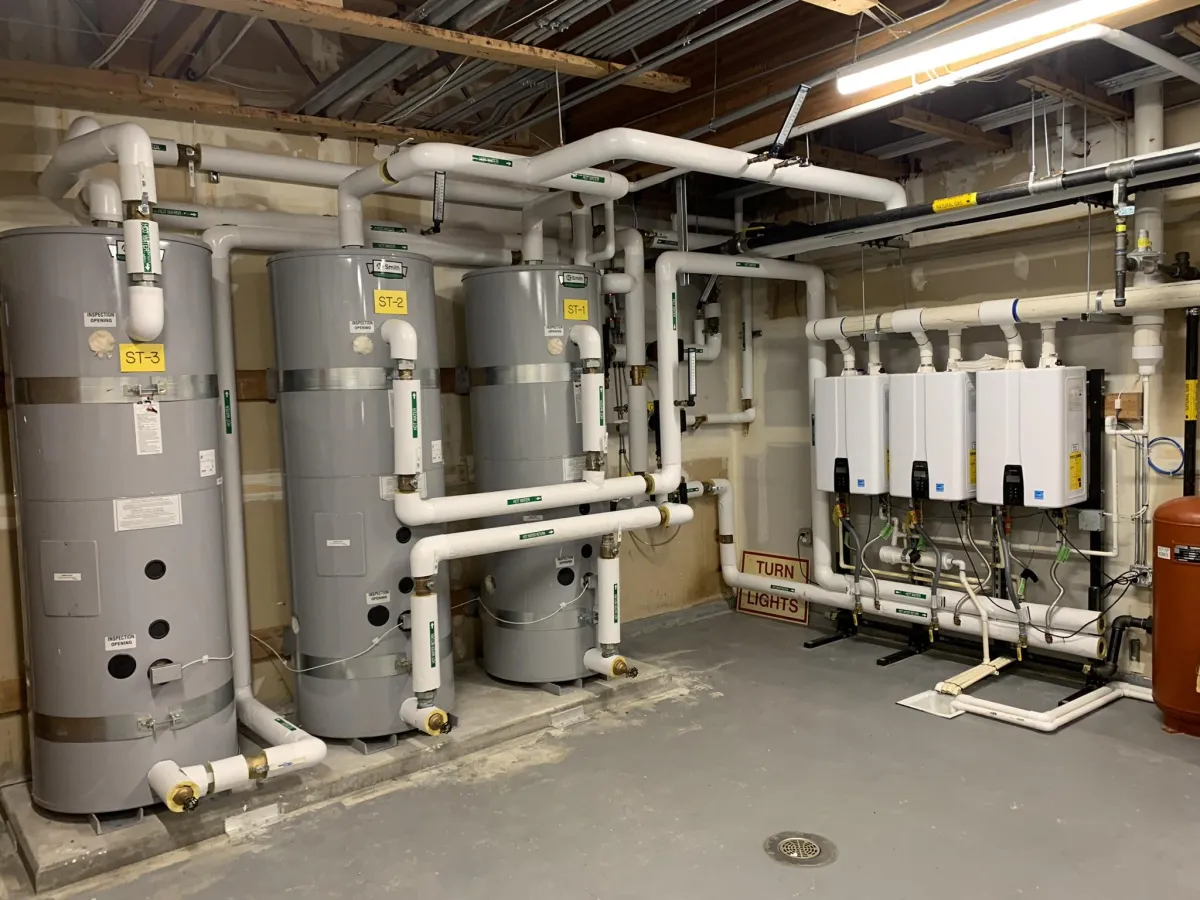
A conventional tank water heater is a steel tank lined on the inside with glass enamel. Inside the tank is also a sacrificial anode rod — a metal rod designed to corrode instead of the steel tank. As long as the anode is doing its job, the tank lasts. Once the anode is used up (typically 4–7 years), the glass lining starts to crack and the steel tank begins corroding from the inside.
By the time water is visibly leaking from the bottom, the steel has rusted through. This is not patchable. It's not a repair. The tank has to come out.
This is also why regular anode rod replacement (every 4–5 years) can double the life of a water heater — it's a simple, inexpensive preventative step that most homeowners have never heard of.
When a bottom-area leak isn't the tank itself
There are a few cases where water at the base of the heater doesn't mean tank failure:
- Drain valve leaking. The drain valve at the base of the tank can develop a slow drip independently of tank condition. If the leak is specifically from the valve and not pooling from the tank body, this is a $50–$150 repair — no replacement needed.
- T-and-P valve discharge tube routed to floor. The temperature-and-pressure relief valve has a discharge tube that typically ends near the floor. If water is coming from this tube, the valve is discharging (often due to thermal expansion or a failed thermostat) and needs investigation, but the tank is usually still good.
- Condensation. High-efficiency gas water heaters and tanks in cold unconditioned spaces can condensate. Usually a slow, diffuse dampness rather than visible pooling.
A plumber can confirm which scenario applies in about 5 minutes on-site.
What replacement costs in Salem
For a standard gas or electric tank replacement in Salem (40 or 50 gallon), the full installed cost typically falls between $1,400 and $2,400. That includes:
- The new water heater (mid-range quality)
- Removal and disposal of the old unit
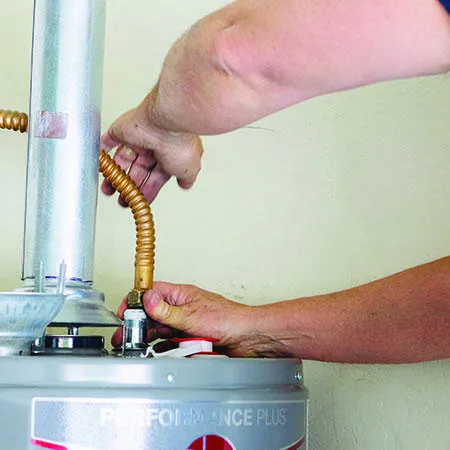
- New flex connections, gas line work if applicable
- T-and-P relief valve, drain pan, earthquake straps
- Plumbing permit (required in Marion County)
- Inspection coordination
- Labor
Higher-end units, tankless installations, hybrid heat-pump water heaters, and situations requiring gas line or venting upgrades run higher. We'd rather quote the exact number after seeing your setup — but this is the range most Salem homeowners fall into.
Repair or replace for an older heater?
If your water heater is 10+ years old and leaking from the bottom, replacement is the only sensible answer. Any repair (to the drain valve, T-and-P valve, or similar) on a 10+ year tank is buying days or weeks, not years.
If your heater is under 5 years old and leaking from the bottom, something went wrong early — usually a manufacturing defect or a water chemistry issue that corroded the anode quickly. Check the warranty. Many tanks have 6 or 10 year warranties covering tank replacement cost (you still pay labor to install).
For any heater in between, the decision depends on exactly where the leak is coming from. A drain valve leak on a 7-year heater is a simple repair. A tank leak on a 7-year heater is usually a replacement — you'd be putting labor into a tank that has 3–5 years left at most.
Call us same-day in Salem
If you've confirmed the leak is from the tank body itself, time matters. Not because the fix is different tomorrow, but because water damage compounds. We can usually get to Salem, Keizer, and West Salem homes same-day for water heater replacements. Call us at (503) 917-3259 and we'll give you a real arrival window plus a quote range before we come out.
See our full water heater repair and replacement service page for more detail on what's involved.